

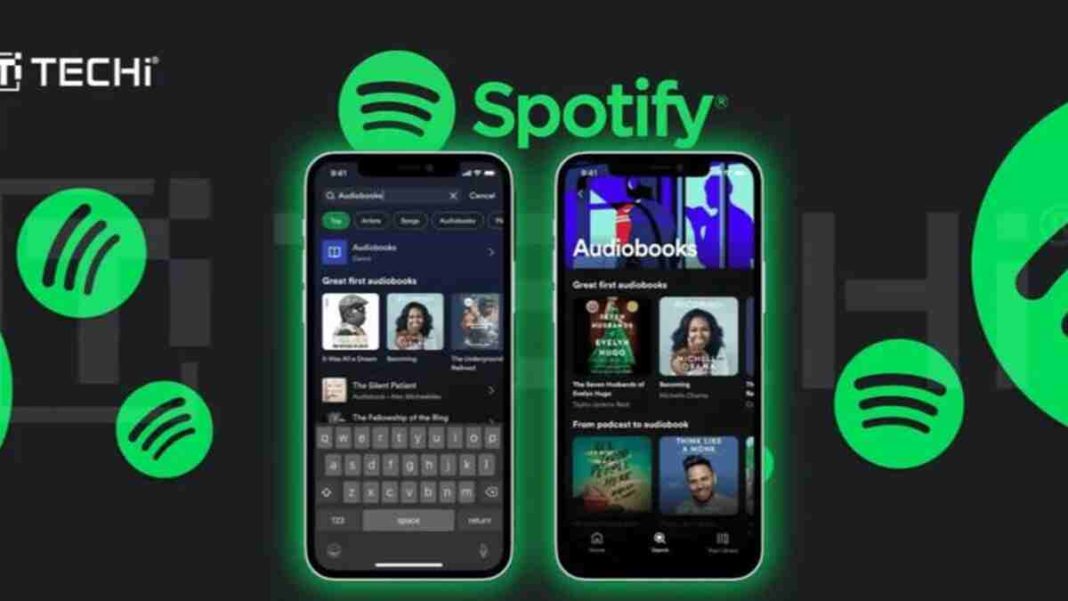


The music streaming service Spotify is dramatically growing its audiobook business, saying that the audiobook service will be launched in over 180 markets by the end of 2026. This will grow the number of markets in which one can access audiobooks on Spotify from 22 to potentially over 750 million population and become a much bigger place for books, besides, music, and podcasts.
The news was announced at the Frankfurt Book Fair one of the biggest annual events for the publishing industry. In a blog post, Spotify said in the new markets, users can choose from more than 350,000 audiobook titles, which covers over 120 languages. “We are also working with hundreds of publishers and anticipate this investment will open up new frontiers for authors and their stories to reach new audiences.
The launch is mainly important for markets across Asia Africa Latin America, Europe, and the Middle East, where the service is set to go live soon. Spotify has announced India will be a part of this expansion on November 12, offering Indian consumers one more entry point to the world of paid spoken-word books. In India, audiobooks will initially be offered as a standalone add-on to Spotify’s Premium service, similar to the company’s existing Audiobooks+ program, or by purchase of individual titles.
WHAT this means for our business model: in some markets, including Spain, Brazil, Mexico, Colombia, Poland, Chile, and Norway Premium customers in certain plans will be entitled to 12 hours of content each month. In some Asian and African markets the primary way to get extra listening will be through Audiobooks+; users can also access individual content libraries via their purchase. The different techniques will vary by market.
The growth illustrates how the popularity of audiobooks has been accelerating on Spotify. The company said monthly audiobook listeners on its platform are up by almost 40% in the past 12 months, while listening hours have increased by more than 30%. Audiobooks+ has grown to over 1 million subscribers since its inception, with an ARR of more than $100 million.
A Page Match feature will also help cross the line between a print book and an audiobook. Readers can scan the ISBN barcode of an actual print book to jump to the same page in the audiobook by matching it with the page number, and it works in over 30 languages. More than a million readers have tried it so far.
This can mean a promising sort of integration, in the company’s view, that could make audiobooks feel like a natural extension of print reading. You might read a hardcover at home, pick up the same story while working out or commuting, and then finish up with print when you get home all without losing your place. That kind of flexibility might appeal to people who didn’t think they were audiobook aficionados.
- New avenues for authors and publishers. The company has also been working on platforms and software that can help self-published authors generate audiobook editions of their titles through digital voice technology, which could reduce certain production barriers.