

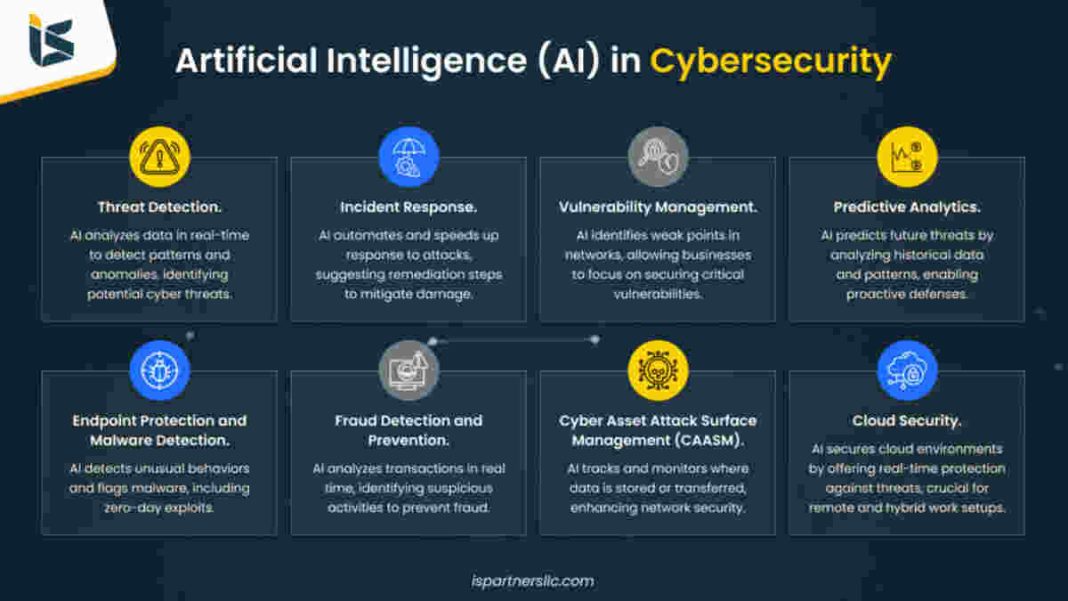

Enterprise IT environments are undergoing rapid transformation as cybersecurity and artificial intelligence continue to evolve side by side. Organizations across the globe are facing a new generation of digital threats that are more sophisticated, faster, and harder to detect than ever before. In response, enterprises are increasingly turning to AI-powered security systems to protect critical infrastructure, sensitive data, and business continuity in 2026 and beyond.
The rise of AI-driven cyberattacks has fundamentally changed the threat landscape. Hackers are now using machine learning tools to automate phishing campaigns, generate realistic deepfake content, and exploit vulnerabilities at scale. These attacks adapt in real time, making traditional rule-based security systems ineffective. As a result, enterprise IT teams are shifting toward intelligent defense mechanisms that can learn, predict, and respond to threats autonomously.
AI-powered cybersecurity platforms are becoming central to modern enterprise IT architecture. These systems analyze massive volumes of network data to identify abnormal behavior that may indicate a breach. Instead of relying solely on known threat signatures, AI models detect subtle anomalies such as unusual login patterns, irregular data transfers, or unexpected system behavior. This allows organizations to respond to potential attacks before they escalate into full-scale security incidents.
Another major development is the integration of AI into zero-trust security frameworks. Enterprises are moving away from perimeter-based security models and adopting zero-trust principles, where every user, device, and application is continuously verified. AI enhances this approach by dynamically assessing risk levels based on behavior, location, and device health. Access decisions are no longer static but adapt in real time, significantly reducing the attack surface.
Cloud adoption has further accelerated the need for AI-driven cybersecurity. As enterprises migrate workloads to hybrid and multi-cloud environments, visibility and control become more complex. AI tools help unify security monitoring across on-premise systems and cloud platforms, providing a centralized view of potential threats. This is particularly critical as misconfigured cloud resources remain one of the leading causes of data breaches globally.
Ransomware remains one of the most pressing concerns for enterprise IT leaders. Attackers are increasingly targeting large organizations with double and triple extortion tactics, stealing data before encrypting systems and threatening public exposure. AI-based threat intelligence platforms now play a crucial role in detecting ransomware behavior early, isolating infected systems, and even predicting which assets are most likely to be targeted next.
Beyond threat detection, AI is also reshaping how enterprises manage security operations. Security operations centers are leveraging AI-driven automation to reduce alert fatigue and improve response times. Instead of overwhelming analysts with thousands of alerts, intelligent systems prioritize incidents based on severity and potential business impact. Automated response workflows can contain threats within seconds, freeing human teams to focus on strategic security planning.
However, the growing reliance on AI also introduces new challenges. Enterprises must ensure that AI security models are transparent, explainable, and free from bias. Poorly trained models can generate false positives or miss critical threats, leading to operational disruptions or security blind spots. As a result, organizations are investing heavily in AI governance, model validation, and skilled cybersecurity professionals who understand both technology and risk management.
Regulatory pressure is also shaping enterprise cybersecurity strategies. Governments worldwide are introducing stricter data protection and cyber resilience requirements, forcing organizations to demonstrate robust security controls and incident response capabilities. AI-powered compliance tools are emerging to help enterprises monitor regulatory adherence in real time and generate audit-ready reports with minimal manual effort.
Looking ahead, cybersecurity and AI are no longer separate domains within enterprise IT. They are converging into a single, adaptive defense ecosystem that evolves alongside emerging threats. Organizations that fail to modernize their security infrastructure risk falling behind attackers who are already leveraging advanced AI techniques.
As digital transformation accelerates across industries, enterprise IT leaders are recognizing that AI-driven cybersecurity is not optional but essential. The companies that successfully integrate intelligent security solutions will be better positioned to protect their assets, maintain customer trust, and operate confidently in an increasingly hostile digital world. In 2026, the evolution of cybersecurity powered by AI is defining the future of enterprise resilience.

