

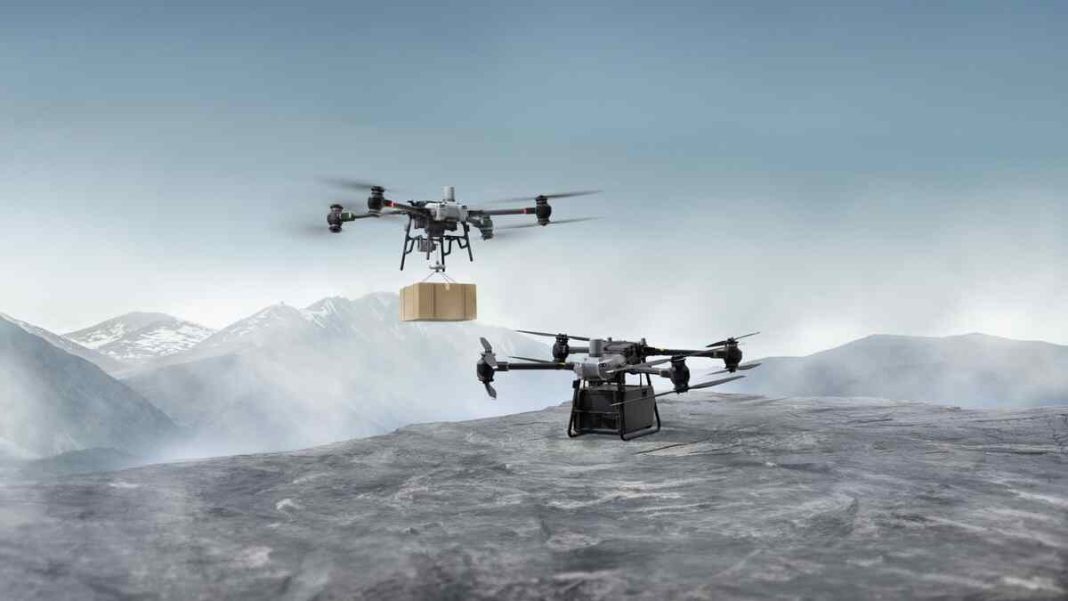

Global drone leader DJI has unveiled a new generation of drones equipped with advanced AI-based obstacle avoidance technology, marking a major leap forward in autonomous flight and aerial safety. The latest innovation is designed to significantly reduce crash risks, improve navigation accuracy, and make drone flying more accessible to both professionals and everyday users.
The newly introduced system uses a combination of computer vision, machine learning algorithms, and multi-directional sensors to detect obstacles in real time. Unlike earlier models that relied mainly on basic proximity sensors, DJI’s new AI-driven approach allows drones to understand their surroundings more intelligently. The drones can now recognize complex environments such as forests, urban landscapes, narrow indoor spaces, and dynamic obstacles like moving vehicles or people.
At the core of this technology is an AI-powered perception engine that continuously maps the drone’s flight path. The system analyzes depth, speed, and object movement to predict potential collisions before they happen. Instead of simply stopping or hovering when an obstacle is detected, the drone can autonomously reroute itself, adjusting altitude or direction to maintain smooth and uninterrupted flight. This creates a more natural flying experience while minimizing manual intervention.
DJI has positioned this upgrade as a major safety enhancement, particularly for first-time drone users. Crashes caused by misjudged distances, blind spots, or sudden obstacles have long been a barrier to mass adoption. With AI-based obstacle avoidance active across multiple directions, users can focus more on capturing footage rather than constantly managing flight controls. This also reduces repair costs and downtime, making drone ownership more practical.
For professional users, the new system opens doors to more complex operations. Filmmakers can now execute dynamic tracking shots in challenging environments with greater confidence. Surveyors and inspection teams benefit from safer flights around buildings, bridges, and industrial infrastructure. The AI-driven navigation also enhances precision in mapping and data collection, especially in areas where GPS signals may be weak or inconsistent.
DJI has also improved low-light performance within the obstacle avoidance system. By combining enhanced sensors with AI-based image processing, the drones can better interpret surroundings during dusk, indoor shoots, or cloudy conditions. This advancement addresses one of the biggest limitations of earlier obstacle detection systems, which often struggled in low visibility scenarios.
Another key feature is continuous learning through software optimization. DJI’s AI models are trained on massive datasets collected from real-world flight scenarios. This allows the system to improve object recognition accuracy and flight decision-making over time. Firmware updates further refine these capabilities, ensuring that users benefit from ongoing improvements without needing new hardware.
The launch comes at a time when regulatory scrutiny around drone safety is increasing globally. Authorities are placing greater emphasis on collision prevention, especially in urban airspace. DJI’s AI-based obstacle avoidance aligns well with these evolving standards, positioning the company as a proactive leader in responsible drone innovation. Safer autonomous features may also support broader acceptance of drones in commercial and public-sector use cases.
Despite the advancements, DJI continues to emphasize user control. Pilots can customize sensitivity levels or disable certain autonomous features depending on their skill level and mission requirements. This balance between automation and manual control ensures that experienced users retain creative freedom while newcomers benefit from added protection.
Industry analysts view this development as a significant competitive advantage. While many drone manufacturers offer basic obstacle detection, DJI’s deep integration of AI sets a higher benchmark for the industry. It reinforces the company’s strategy of blending hardware excellence with intelligent software to maintain its leadership position.
With AI-based obstacle avoidance becoming a core feature rather than a premium add-on, DJI is redefining expectations in the drone market. The technology not only enhances safety but also expands what drones can achieve in real-world conditions. As autonomous flight capabilities continue to evolve, DJI’s latest innovation signals a future where drones are smarter, safer, and more intuitive than ever before.

