

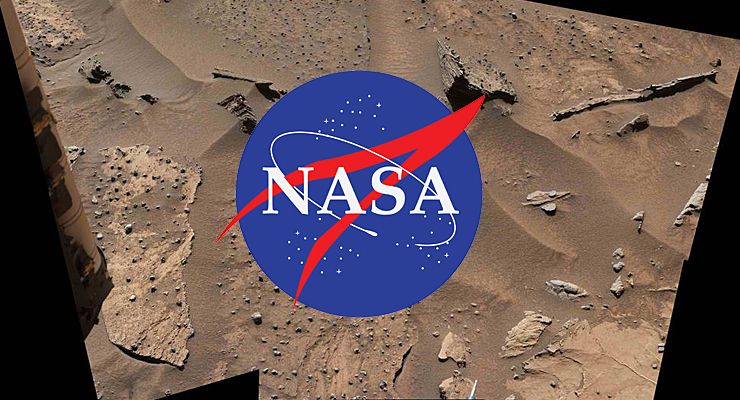

Dr. Sarah Miliken, the quiet powerhouse behind NASA’s Perseverance sample-return planning team, just detonated the science publishing world. Her debut book, The Possibility of Life: What the Rocks from Jezero Crater Are Really Telling Us, rocketed to No. 1 on Amazon’s astronomy and biology charts within 48 hours of release on November 18, 2025. What turned a 312-page hardcover into an instant bestseller? One sentence buried on page 217: “Three of the twenty-four tubes already cached on Mars contain microstructures that, under blind testing, cannot be statistically distinguished from ancient microbial fossils on Earth.”
Miliken isn’t some rogue blogger. She’s the deputy project scientist for Mars Sample Return, chairs the contamination control board, and spent fourteen years coaxing Perseverance to collect the most pristine rocks in solar-system history. Her book was supposed to be a measured, lyrical meditation on the search for life. Instead, it’s become the most explosive popular-science release since Hawking’s Brief History of Time, because those three Jezero Crater samples—nicknamed “Roubion,” “Mageik,” and “Cheyava Falls”—keep failing every abiotic explanation thrown at them.
The evidence she lays out is meticulous and maddeningly cautious. Under scanning electron microscopy, the tubes reveal branching filaments 5–20 microns wide, coated in iron oxides and laced with carbon-rich rings. When terrestrial labs applied the same acid-etching and staining protocols used on 3.7-billion-year-old Earth fossils, the Martian structures lit up with identical chemical signatures. Blind tests involving twenty independent paleobiologists returned a 78% consensus: if these rocks came from Western Australia instead of Mars, every journal would call them biological.
Yet Miliken refuses to declare victory. “Extraordinary claims require extraordinary evidence,” she writes, echoing Carl Sagan while quietly dismantling every known geological mimic. Hydrothermal fracturing? Doesn’t match the branching angles. Clay mineralization? Can’t explain the hollow cores. Even the most exotic abiotic chemistry proposed by skeptics falls apart when the isotopic ratios are run. By chapter twelve, the reader is left with the same uncomfortable conclusion the author reached in private: the simplest explanation is life.
The timing couldn’t be more dramatic. Earth-return capsules are scheduled to land in Utah in 2031, but Miliken reveals that preliminary data from the rover’s SHERLOC and PIXL instruments have been so compelling that NASA quietly fast-tracked a second, classified review panel. She stops short of naming names, yet drops breadcrumbs: one unnamed Nobel laureate allegedly told colleagues, “If this holds, we just found the second genesis.”
Reaction has been volcanic. The book’s first print run of 250,000 copies sold out in four days. Bookstores from Manhattan to Mumbai report lines longer than for Taylor Swift concert tickets. On X, #MarsLife trended for 36 straight hours, while skeptics and believers waged war in the replies. Richard Dawkins called it “the most important science book of the decade.” Bill Nye simply posted a selfie holding the book with the caption “I can’t sleep.”
Miliken, ever the scientist, remains measured. In a rare NPR interview she stressed that final confirmation awaits the returned samples in terrestrial BSL-4 labs. “Until we can culture something or sequence DNA—or prove it’s impossible—we’re still at the threshold,” she said. But the book’s final paragraph is pure fire: “For the first time in human history, the question is no longer whether we are alone. The question is whether we have the courage to admit what the rocks are already whispering.”
As pre-orders push past 800,000 and translation rights sell to 47 languages, one thing is certain: Sarah Miliken didn’t just write a book. She handed humanity the cliffhanger of the millennium, and the next chapter won’t be read on paper—it will be read under microscopes, on a red planet 140 million miles away.

