

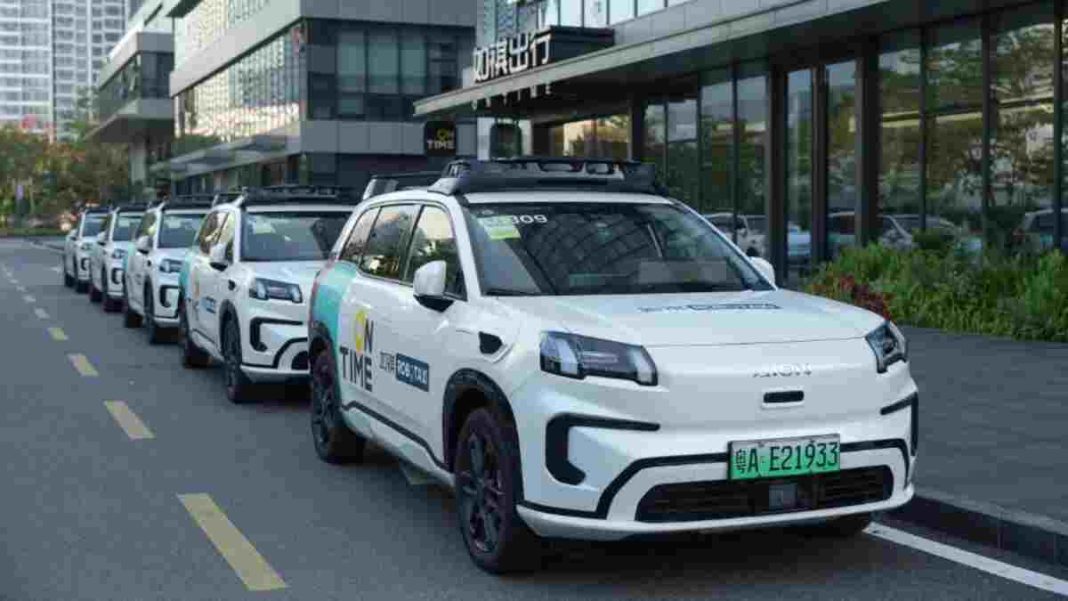


The global transportation industry is undergoing one of its biggest transformations in decades as robotaxi companies push rapidly toward mass adoption. In 2026, autonomous ride-hailing is no longer a distant concept but an emerging reality, with major tech firms, automakers, and mobility platforms racing to deploy driverless taxi fleets across cities worldwide.
One of the most significant developments comes from a newly announced partnership between Uber, Pony.ai, and Verne, aiming to launch Europe’s first commercial robotaxi service in Zagreb, Croatia. The collaboration combines Uber’s global ride-hailing platform, Pony.ai’s autonomous driving technology, and Verne’s fleet operations. Early testing is already underway, with plans to expand into multiple European cities and eventually deploy thousands of self-driving vehicles.
This move highlights a broader global trend where companies are choosing partnerships over competition to accelerate adoption. Instead of building everything in-house, firms are combining expertise in software, hardware, and logistics to scale faster. Uber alone has entered multiple collaborations, including projects with Nvidia, Lucid, Nuro, and Nissan, to bring robotaxis to cities across North America, Europe, and Asia.
Meanwhile, Amazon-owned Zoox is aggressively expanding its robotaxi footprint in the United States. The company is extending services in San Francisco and Las Vegas while preparing new launches in Austin and Miami. With nearly two million autonomous miles already completed and hundreds of thousands of riders served, Zoox is moving closer to full commercial deployment, starting with limited early-access programs before opening to the public.
China’s Pony.ai is also scaling rapidly, announcing plans to more than double its robotaxi fleet to over 3,000 vehicles operating across more than 20 cities worldwide. Nearly half of these vehicles will be deployed internationally, signaling a strong push by Chinese companies into global markets. The company has already reported significant revenue growth driven by increased fleet size and rising user demand, showing that robotaxis are beginning to generate real business value.
Beyond expansion, innovation in vehicle design is reshaping the concept of urban mobility. At CES 2026 and other global tech events, companies unveiled futuristic robotaxi models built specifically for autonomous travel. Lucid introduced its “Lunar” concept, a compact two-seater vehicle designed for efficiency, reflecting data that shows most ride-hailing trips involve only one or two passengers. Smaller, lighter robotaxis reduce energy consumption, lower operating costs, and improve scalability, making them ideal for dense urban environments.
Industry analysts believe 2026 could mark a turning point for autonomous taxis. Advances in artificial intelligence are reducing costs and improving driving accuracy, enabling faster deployment across cities. Some projections suggest robotaxi fleets could grow tenfold by 2030, while the market itself is expected to expand at an exponential rate over the next decade.
However, challenges remain. Regulatory approval continues to be a major hurdle, with governments cautiously introducing pilot programs and safety frameworks. In countries like the UK and Japan, robotaxi services are still in trial phases, requiring strict oversight before full commercialization. Consumer trust is another critical factor, as passengers must feel safe riding in vehicles without human drivers.
Despite these obstacles, the momentum behind robotaxis is undeniable. From Las Vegas to Tokyo and from San Francisco to Zagreb, autonomous taxis are gradually becoming part of everyday transportation. The shift is not just about technology but about redefining how people move in cities, reducing costs, improving efficiency, and potentially lowering emissions through optimized electric fleets.
As companies continue to invest billions into this space, robotaxis are moving from experimental pilots to scalable global services. The coming years will determine how quickly they become mainstream, but one thing is clear: the era of driverless urban mobility has already begun, and it is accelerating faster than ever.