

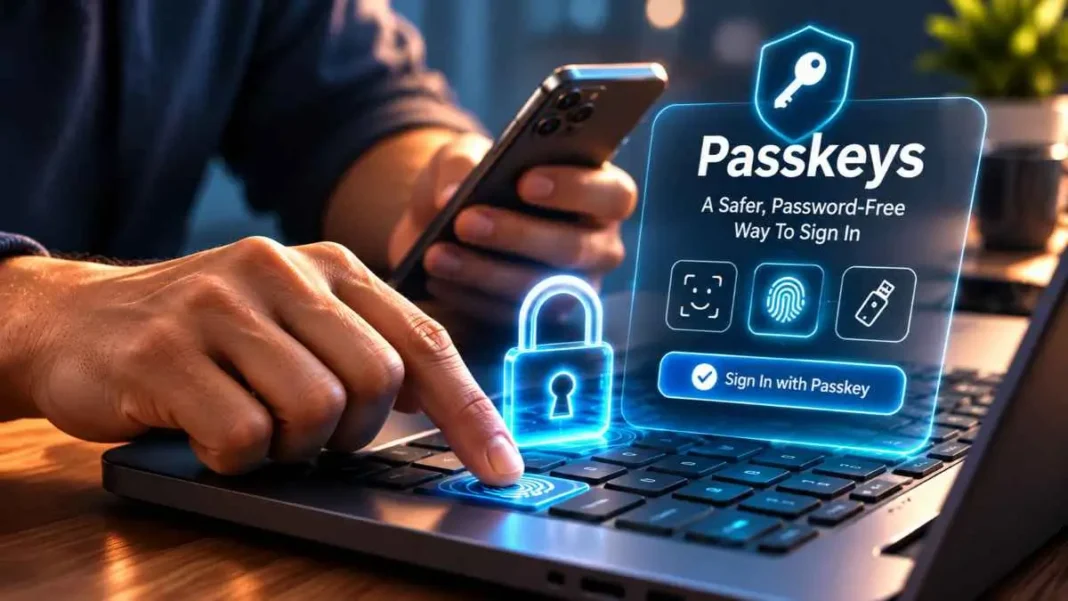


Passwords have been the gatekeepers to our digital world for over fifty years. Initially introduced in the 1960s to provide a simple way to access shared mainframe computers, we’ve since used passwords to protect our bank details, medical information and even national infrastructure. This has led to poor outcomes with compromised credentials being one of the leading causes of data breaches globally. On average, people have dozens of passwords to remember now, most of which are weak and reused.
Passkeys are a safe and simple answer to a problem.
The Anatomy of a Broken System
The issue with passwords is that they are shared secrets. As both you and the service know what the password is, there are multiple ways it can be compromised. Phishing websites can trick you into giving away your password, data breaches can expose large amounts of passwords and credential stuffing exploits take advantage of our natural tendency to reuse passwords.
Although there are ways to improve passwords (password managers, complexity requirements and MFA), they’re all extra steps and ultimately don’t solve the core issue. SMS codes can be intercepted using SIM swapping and one time codes can be passed via a realistic phishing login page. We’ve been building up a sandcastle wall.
How Passkeys Work
Instead of using shared secrets passkeys use public key cryptography based upon the FIDO2 and WebAuthn standards. When you set up a passkey, your device creates two keys that are mathematically related. One key (public key) is sent to the website/application you’re trying to access. The other (private key) stays on your device. It is protected using hardware and can only be accessed using your fingerprint, face or device PIN.
When you try to log in, you’ll receive a cryptographic challenge from the service. Using your device you’ll sign the challenge with your private key. This proves you have the correct passkey without ever exposing it. There is no leaking of any information to the server and nothing to type.
The passkey is also tied to the real website domain meaning that even if you’re directed to a phishing login page, the passkey will not activate. The cryptographic challenge will fail and phishing is no longer effective.
Security Meets Simplicity
Usually when we change something to be more secure, there are downsides. However, using passkeys means you can log in with one quick look at your phone or a touch of a sensor. There is no need to remember a complex password, no waiting for a reset email and no confusion with character limits.
Passkeys have been well adopted within the industry with Apple, Google and Microsoft all supporting them. Passkeys can be synced using your account on each platform and password managers. This means that once you create a passkey on your device it will be available on other devices. Many major services are offering passkey support including payment platforms, retailers and social media. Early adopters have seen increased success in signing in and less support calls.
The Obstacles Ahead
Unfortunately there currently isn’t a completely seamless transition to a passwordless future. Not all smaller sites and enterprise systems have passkey support and so we’re still in a position where we have a mixture of passkeys and passwords. Although passkeys can be used across different platforms, it’s still not perfect.
There is a balance to strike when setting up recovery options. If the recovery options aren’t strong (e.g helpdesk call that can be easily faked), then attackers will just go round the front door. Although passkeys protect your login, you also need to ensure your recovery options are protected.
There are also genuine concerns around relying on a few big tech companies to handle the syncing. If you like having control over your own information, you may prefer to use hardware security keys or open source password managers. Luckily the standards do support these.
A Cultural Shift as Much as a Technical One
One of the biggest challenges with passkeys is the mindset. We’ve been conditioned over decades that to keep things secure we need long passwords, symbols and regular updates. To believe that we can have invisible security will take time to get used to. However, clear design will help.
Conclusion
Whilst passwords won’t be gone overnight as legacy systems can be tricky to change and we have bad habits, there is definitely a trend here. Passkeys remove the most exploited vulnerability in online security. They protect the user without needing them to be vigilant.
To conclude, if passkeys are available turn them on! In an organisational setting, make sure your systems are built for a passwordless future. Ensure your recovery options are robust. Passwords have outlived their usefulness so it’s time to let them go!