



Being locked out of a Goggle Account can be more stressful than you might think. For many individuals, a single account contains years of email archives, thousands of photos, vital docs contacts hundreds of other apps and services. Losing access to the password, device or phone can suddenly be extremely frustrating.
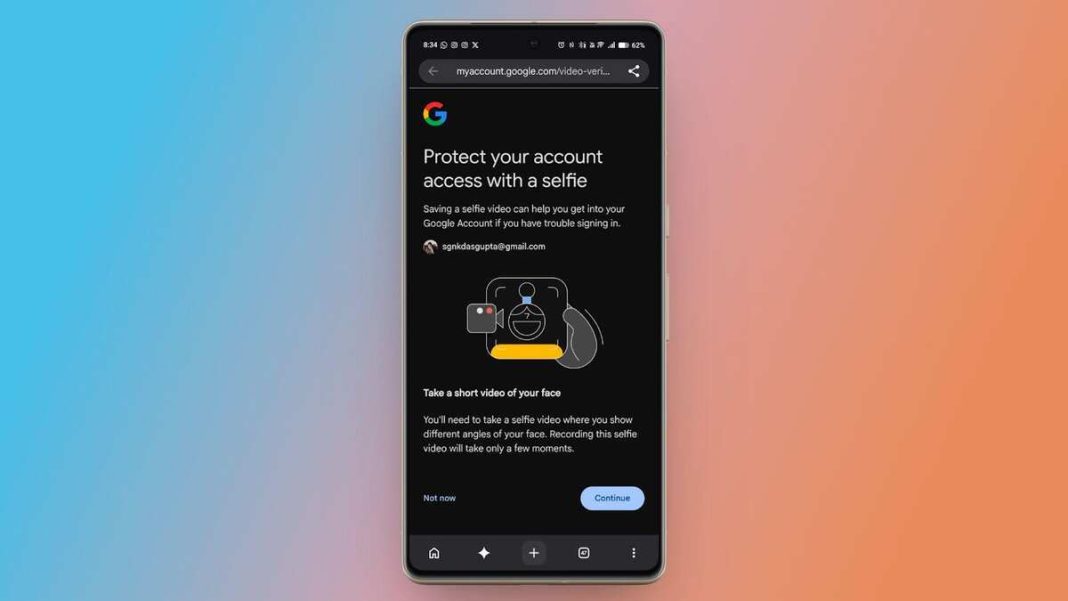
Google is unveiling a new feature that aims to add a bit more human touch to account recovery. Selfie Video for Sign-In is an innovative way to help users regain control of their Google Account when others have limited access. Google announced the feature July 23, 2026.
It’s an easy concept. Rather than given a password, a backup phone number or another gadget; customers are able to preconfigure a selfie video. They simply look into their camera and follow a few animated head movements that can be directed while setting up. Google will then record as many different views of their face as possible for future identification. In the event that the user gets locked out of the account again, the user can be prompted to record a second short selfie video, and this will be compared against the first selfie video stored at log in.
There are also additional questions asked like turning one’s head, for validation. If successful, the user is granted access again. This is a good distinction to make, as Google’s feature is intended to be a backup sign-in and account-recovery method, not a replacement for passwords, passkeys, or anything else.
Google still recommends users to have multiple methods of gaining access and recovering their account, such as passkeys, recovery contacts and recovery information. The selfie video is just one more option in case the usual method isn’t available. The timing is important too.
As online scams get more and more sophisticated and the creation of deepfakes using Artificial Intelligence becomes more and more automated, verification of the authenticity of identity is a much bigger problem for tech companies. A mere photograph of somebody’s face no longer necessarily suffices to prove a real person’s existence. Google states that the selfie video system incorporates several security features designed to identify attempts at video spoofing, such as face swaps and re-animated videos.
The series of gestures also contributes to the video capture system’s ability to determine “liveness” and differentiate a live person is recording a video from a face image or spoofed video. Current safeguards against dodgy sign-in attempts continue to be used.