

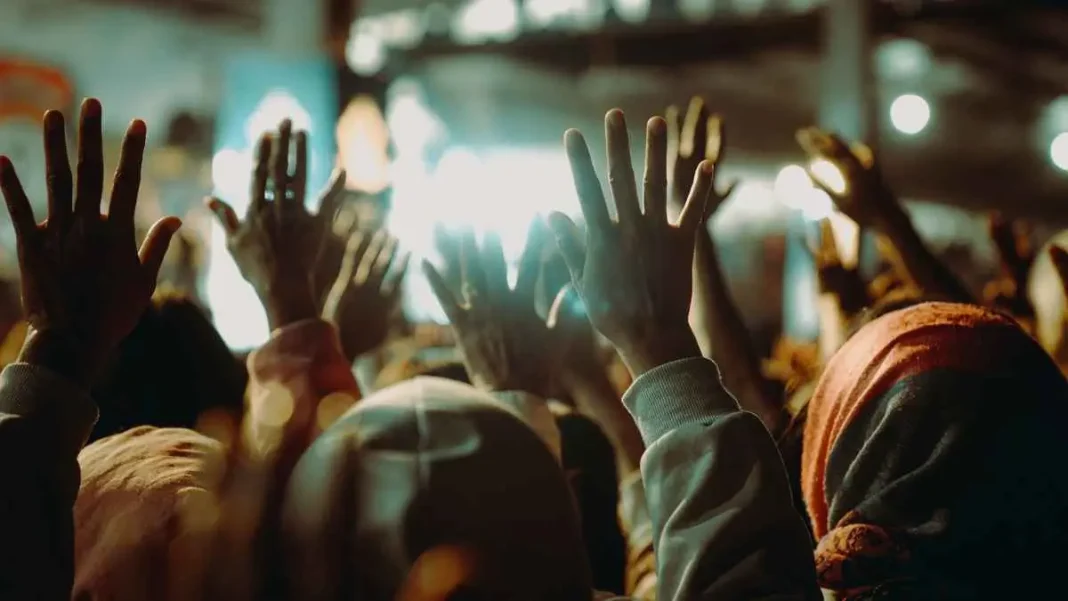


Corporate events are not only entries in a companys financial budget but also carefully designed events that play a fundamental role in the way employees see their company, the way clients see a product/company brand, and the way teams collaborate through goals that are common. The distinction between an event that is remembered for years and one that people are forgetting on the way home is made up of factors like having the right goal at the right time, proper preparation, and keeping the commitment to the overall visitor (guest) experience at the highest level.
Start with a Clear Purpose
Organizing a successful corporate event usually starts with defining the purpose of the event rather than choosing the venue or catering Deciding on the goal of the event can help you choose all other elements of the event – the type, the setting, and the theme. The team-building workshop will require altogether different planning of a conference for investors or a dinner party to thank the clients. As soon as you become a vague about the aim of the event, it just becomes a collection of unrelated parts. But if your purpose is clear and precise then everything starting from the opening speech to the cocktail party for the last farewell – all will contribute to achieving the same end.
First write down only one sentence which tells what is the fundamental reason you want to plan this kind of gathering. Do you plan to appreciate your people, to generate interest in your business, to introduce a new product, or simply to unite your team through a shared company goal? This one sentence will help you to have a common view when different priorities arise and will enable your planning team to have a single focus when faced with difficult decisions.
Know Your Audience Inside and Out
Even the most breathtaking venue loses its charm if the people inside it are not in the spirit of the function or feel discomfort. Getting to know your audience is as important a factor in organizing your event as any other component you think about. Think about the people who will be there but on their interests, the things they are aware of, what sort of event is going to make them feel appreciated rather than treated like a cog in a wheel of a business.
When it is an internal event you may talk to the people in charge of the departments, read the feedback of the employees, and reflect truthfully on what the employees really require. But, when you have a guest list you will need to study their industries, communication styles and expectations. Personalizing can be done even with limited budget. Just give it your full attention and the effort will be noticed. Something simple, like the keynote speaker being a different person each day or the topic of the session being something that the audience relates to very well, can show the commitment that the organisers have put into this experience.
Choose a Venue That Does the Work for You
Choosing the right venue is one of the most important decisions when organizing an event as the physical surroundings can greatly influence the mood even before the first activity begins. Light and open spaces suggest ideas that are fresh and unbound. If a venue is cool and clean and has hardly any ornamentation, then most probably it conveys high-level professionalism and perfection. But, a venue that’s located in nature is perfect when the main focus of an event is on relaxing conversation and deep thinking. Simply make sure that the space will make your guests feel exactly as you want them to.
Logistics Yet are equally important. You need to find a place that can accommodate the different travel requirements of your guests and is also equipped with top-notch sound and projection equipment, good catering facilities and an adaptive floor plan. A place that looks amazing from outside but has issues with the audiovisual aspect or can’t provide more than one area of activity will lead to dissatisfied guests and make you lose the trust of the audience. When available, it is best to inspect the venue physically and don’t be afraid to ask the venue staff what are the risks and how they normally handle them.
Curate an Agenda That Earns Attention
The modern corporate professional doesn’t like being fed information passively. It’s disengagement that’s guaranteed when you passively sit through hours of slides in presentation format without interaction, movement, or any surprise. A well-crafted agenda that captures and sustains interest uses different formats, controls the rhythm of energy, and also creates opportunities for participants to make meaningful connections. Think of rhythm as a way to create variation in the flow A strong opening that captures and invigorates a person gets a great start. Then go in-depth by using methods that force people to get actively and directly involved.
Also, don’t forget to give people some time to change rooms where they can have conversations with one another freely rather than being pushed along from one event to another. Finish off with something that resonates on a deeply personal level that brings the key point of the event into the spotlight. In fact, a successful agenda is comparable to a well-written narrative or plot. It is a starting point that pulls the audience in and a middle part that is challenging and motivational. Finally, it is an ending that leaves people not only motivated but also in a community or network.
Make Technology Work for You
When harnessed effectively, technology can elevate a great corporate event into a memorable one. Event app tools provide personalized experiences where attendees can plan what they want, get to know other registrants beforehand, and get all the information they need right in front of them. Live polls and Question & answer functionalities help transform a silent crowd into an active one. With hybrid event streaming capabilities, companies can share their events with remote staff members through a broadcast without compromising on the live event experience.
Though, technology must be a means to connect people not a barrier. The main idea is not to have a tech element available at every given moment but to create friction-free situations that open up opportunities for genuine and lasting connections. If the use of a gadget calls for a prior explanation, it probably does more harm than help. Your technological arsenal should be focused and tested thoroughly before you start with the event.
Elevate the Experience Through Thoughtful Details
Memorable corporate events take place in the details. Good coffee, for example, really does make a difference. So also are nicely designed signage, a warm welcome from the staff, well-thought-out background music, and the room setup which promotes interaction over isolation. These are all expressions of care; care spreads. When visitors are aware that their experience down to the smallest detail has been considered by someone, they tend to relax, get into a deeper interaction, and end up with a stronger emotional connection to the company or institution hosting them.
Food and beverages should be given extra consideration. Catering which addresses food allergies, shows local culture, or presents unexpected and upgraded choices, is a very powerful tool, since it reveals that the committee respected your time. The way the room where the event takes place is set up reflects the level of interest in getting to know each participant besides meeting a certain schedule.
Measure What Matters After the Event
An event is not just concluded when the last guest is leaving the room. To have successful events in the future one has to be aware of what did well and what did not. To do that it is helpful to gather opinions straight after the event when it’s still in people’s minds. That can be done via short quantitative questionnaires combined with open questions that allow for honest and profound insight. Besides that one should also look at the number of people that have actually come to the event, the degree of participation during the sessions, conversion or follow-up metrics in line with the aims of the event.
Besides the figures you have the human side. Have the people been sharing parts of the event content on social media? Are conversations from the event leading to further relationships? Is there a momentum in the community around the goals that the event’s main idea was supposed to achieve?
Make the Experience Last
The best, corporate events will not only be a hit in the room, they will keep the conversation going long after the guests are at home or back at the office. They will send them home with a clear path forward like a decision made at the event that they can carry with them or maybe just a new idea. It could also be, a renewed sense of pride in their company if their company’s values were highlighted at the event. A well-crafted follow-up letter that highlights the event, sends out additional information/resources for the attendees and thanks them for their involvement, helps the event live on in peoples’ memory and adds up to reinforcing its value.
To plan a truly memorable corporate event one must dig deeper and really understand what they are doing. They must ask themselves why they need to do it and who will benefit. They are making people a priority at each turning point in the decision-making process. Lastly, they are being genuine in the way of the company’s values through their actions. Once all that is present, people will no longer perceive it as just a corporate event but they can connect with it and remember it as a good time that they can refer to.