

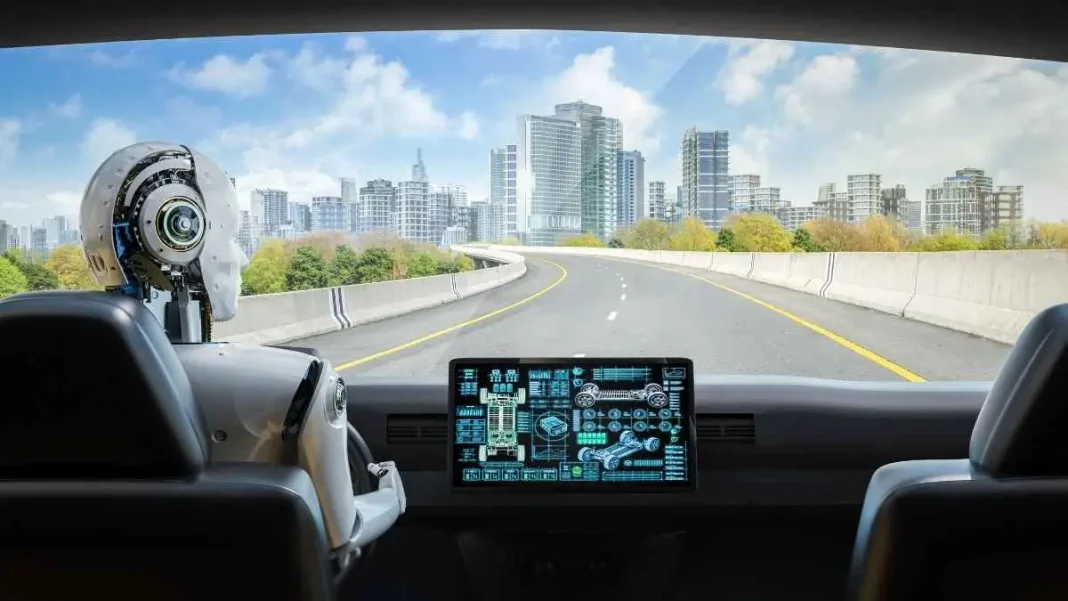


Humans have dreamed about self-driving cars since the very first cars were invented in the early twentieth century to the far-reaching, even unrealistic, projections made in recent decades by the most imaginative thinkers of the industry. These days, that vision is no longer science fiction. Autonomous cars, usually called AVs or robots, are gradually getting used to streets and highways and have even begun picking up passengers and taking them for a ride without any human interference. A couple of years after mid-2026 this kind of technology, besides offering a new way of transportation and reducing the number of accidents, it can also trigger many questions about society, safety issues, etc. that will be impossible to forget. The road to a robotic future continues but, at the same time, there are still problems ahead, some of which will have to be resolved before the complete automation of the automotive industry.
Before looking at the present situation, let’s think about the definition of levels of autonomy, the concept that classifies vehicle automation. The Society of Automotive Engineers set this structure and divided the autonomous levels into 6 levels, Level 0 where the car has no automated features and the human has to do everything to Level 5 where the vehicle can do everything in any condition and even if there’s no person in the car. Though, in reality, the auto industry pretty much ignored Level 3 for personal cars, focusing instead on a more mature form of Level 2, and at the same time, the robotaxi companies are trying to get Level 4 capabilities but are limited to very restricted urban areas.
These systems rely on an elaborate collaboration between hardware and artificial intelligence as their core. Environmental perception is continually provided by devices like cameras radar as well as occasionally, lidar sensors which produce a very fine-grained model of the outside world. Machine learning algorithms are then used to process this data on the go, anticipating what pedestrians, cyclists, and other cars will do, and at the same time deciding whether vehicle should accelerate more, brake or turn. High-definition maps and accurate localization technologies help a self-driving car not to lose its place in the world. Companies take on various paths to technology. Waymo is one of those that uses multiple sensors like lidar to perceive precisely the depths. OEMs like Tesla have made cameras as their dominant element, a visual-only system with end-to-end AI that is trained via the company’s driving fleet data. Although these techniques are quite different, both are being constantly refined. Hardware, simulation and predictive algorithms improvements help vehicles cope with more and more intricate driving situations. In summer 2026 the first waves of commercial robo-taxi services have rolled out.
Alphabet unit Waymo is the leading player in the U.S. market, having 3.7k autonomous taxis, eleven metro areas including Phoenix, San Francisco, Los Angeles Austin Dallas, and also Miami are part of the Waymo network. Through its service, the company gives away a large number of rides – about hundred thousand rides per week with hundreds of autonomous driving miles accumulating weekly showing significant safety gains with autonomous vehicles compared to human drivers performing similar tasks. Silicon Valley automaker Tesla has also made headway with its unsupervised robotaxi pilot to several cities in California and even Texas and Florida with vehicles that are just Model Y vehicles with few modifications while Cybercab, its new vehicle, is still being finalized for production.
Rides on the Las Vegas Strip have been charged and operated by Amazon’s Zoox in its wheel-lessness vehicles, that are distinct from conventional ones. In the Chinese context, Apollo Go by Baidu, WeRide, and Pony.ai are the major companies behind large fleets running autonomous vehicles in different cities, which have also led the world robot taxis population Really. Alongside that development is happening to robot trucks: Aurora Innovation is rolling out its second generation, truckless vehicles for several Sun Belt routes and expecting by the end of the year hundreds of driverless vehicles to be on the streets for commercial use. This series of commercial deployments is a sign that 2026 has become a commercial tipping point for Level 4 operations in constrained environments.
The opportunities offered by this technology are considerable and can go beyond just a few aspects. A large proportion of traffic collisions are because of human mistakes – initial data from major AV companies indicate a massive decline in crashes, including those resulting in injuries. Unlike drivers, machine-driven cars are unaffected by sleepiness, distraction, or impairment through consumption of alcohol or drugs. Apart from safety, they also deliver a smoother flow of traffic which reduces congestion, saves energy and ultimately brings about fewer emissions to the environment. Autonomous vehicles have the promise of not only saving human lives and avoiding injuries but also helping the aging and disabled to regain the ability of going to work, seeing doctors and spending their leisure time freely. Many these AVs are going to be electric So a switch from internal combustion powered cars would greatly help us to meet our targets for lowering the emissions from the road transport sector.
Changes in economic sectors due to transportation innovations are likely as well. In the city areas, less land will be needed as car parking is expected to decrease which would create additional space for buildings, and that is an added bonus for the cities’ economies. On one side, the price of driving and parking services can go down for citizens due to a reduction in vehicle numbers which would mean lower demand for the use of such services. But, the development of technologies for fleet tracking, data handling systems and auto services of repair, as well as vehicle reconditioning, will open new business ventures. The trucking industry will benefit the most so that a 24/7 operation is the most probable for the self-driving trucks with no need to stop for driver’s rest periods in between. Because of this, the speed and efficiency of goods delivery could increase A lot. Yet, the way ahead will not be smooth because these vehicles will have to face a bunch of hard-hitting challenges. It is a reality that technical reliability of autonomous systems are not complete. These so-called rare scenarios of the system being put to test, for example, in very unusual conditions like heavy rains or snow or during roadworks, are actually quite problematic.
Rapid spread of such accidents will not go unnoticed by the public which will lead to a loss of confidence and a further drop of trust that has already been fragile. For example, even the safest of cars may end up drawing negative emotions from people due to a highly publicized incident. The rules of the country are changing. For example, the US National Highway Traffic Safety Administration has recently put forward proposals that would allow vehicles that operate without conventional controls. But since laws and regulations differ in different localities and regions, the whole process of the expansion of autonomous vehicles is going slow. As for now there is no consensus over the decision of who the AI system shall hit in a situation where the accident is about to happen and both people will be involved because of the vehicle’s reaction. There is also the problem of hacking because of Really connected cars are open-ended systems which can become targets to hackers. Major transformations like these ones could take place at the societal level, which include getting rid of professional drivers, rethinking land use, and the change in urban planning. All these changes, for sure, have to be planned and dealt with that causes minimum disturbance to society. The main issue will be the high costs involved. Prices of the sensors have dropped quite a bit compared to before, but the costs related to the validation, the provision of insurance, and the adaptation of the infrastructure remain significant.
Full autonomy at level 5, which can cope with any road conditions and any type of roads are still far away. Only a few, if any, Level 5 vehicles are currently being tested, and it is the expert opinion of most that Level 5 will not be available within just a few decades but will become the technology of a distant future. Robotaxis, Then again, might be more common in major cities and countries during the 2020s and even up to the early 2030s, as several hundreds of thousand autonomous car units are expected to be on the global market, mainly in urban areas. The expansion in highway and logistics hub trucking will take place much earlier as such environments will allow for the greatest degree of predictability and safety for autonomous vehicles. Possibly, in the future, advanced driver aids will be present in every car besides very cheap or second-hand models. True hands-free, eyes off driving systems will Still be slower in coming for individuals, and will still be very limited in use until it’s time. It is forecasted that the market share for robotic mobility will increase to a significant and noticeable level in urban transport and freight movement by the time of the 2030s. This will be due First and foremost to a combination of decreasing costs, enhancing of technology, and Truth is laws and regulations surrounding autonomous vehicles will finally become clear and predictable. The shift to robotics will neither be evenly-paced nor sudden. There will be different speeds in different cities and regions and each application/combination of applications will be considered as one use case to the next.
Factors that will determine the success or failure of this shift to autonomy in mobility include safety transparent release of the data collected, and fair and inclusive access to the tech. It should also be well coordinated with the public transport, the taxi, and the bike-sharing systems that are already on the market. The positive outcomes if this transition is done well, i.e. through well-planned stages and the use of the lessons learned from past mistakes, could be a safer traffic, a mobility that works for all, and cities that will be organized by the needs of their people rather than the amount of space required for parking them. What we can see now are the self-driving vehicles that are being tested on a small number of the streets in the current road systems around the world. The robotic transportation revolution which we have been waiting for has actually started but is still in its early phase. The dream goal of all this autonomous vehicle development remains at the end of a long road where robot systems take over most of the routine driving tasks. Every time the vehicles get a chance for a fully autonomous drive, the road becomes clearer.
Getting back to Level 5 autonomous vehicles capable of driving safely in any situation everywhere without a human driver, this is probably going to take a while before it’s a reality, as even those within the field mostly believe this will be a much bigger longer-term challenge rather than something they can realistically expect to get to soon. For robotaxi operations, the rollout to new geographic areas and additional cities is expected to be a main focus during the latter half of the 2020s and early 2030s which means that eventually it might be robotaxi vehicles on our streets numbering in several hundred thousand around the world with most them being located in large urban settings. On the highway, autonomous trucking as between logistics hubs is probably going to expand very quickly since the environment is so much more predictable and stable. For cars owned and operated by individuals, driver assistance is going to keep getting more advanced and widespread, whereas real hands and eyes free control systems for car private owners will probably develop slowly and start only with the most limited of domains. Industry forecasts state that around 2030 and onward, the combined forces of lowered price, better tech, and settled regulatory structures that result from this cooperation will enable self-driving cars to become a significant part both of city transport and of moving goods in cities. The future robot world will be a long and not smooth process. It will be a transition one city at a time, one use case after another, and the development path will also be a mix of new technologies, policy-making decisions, and society’s response to it.
What makes it succeed is making the cars really safe, having people willing to share data, having people of all walks of life be able to access the service, and making sure it is well integrated with the transportation that people use right now. So long as autonomous vehicles are properly handled, it is entirely possible that streets will get much safer and that mobility in total will get more people to the places they need and that cities will eventually come into existence based upon the needs and desires of the residents and not the availability of car places. We see on these days the autonomous vehicles that are the first to travel on the streets of our towns which means the journey that was planned has in reality taken off very well. The destination, a world where machines will perform most of the driving of a vehicle, is not very close yet, but if we just keep driving, it will get clearer with every autonomous mile that is made.